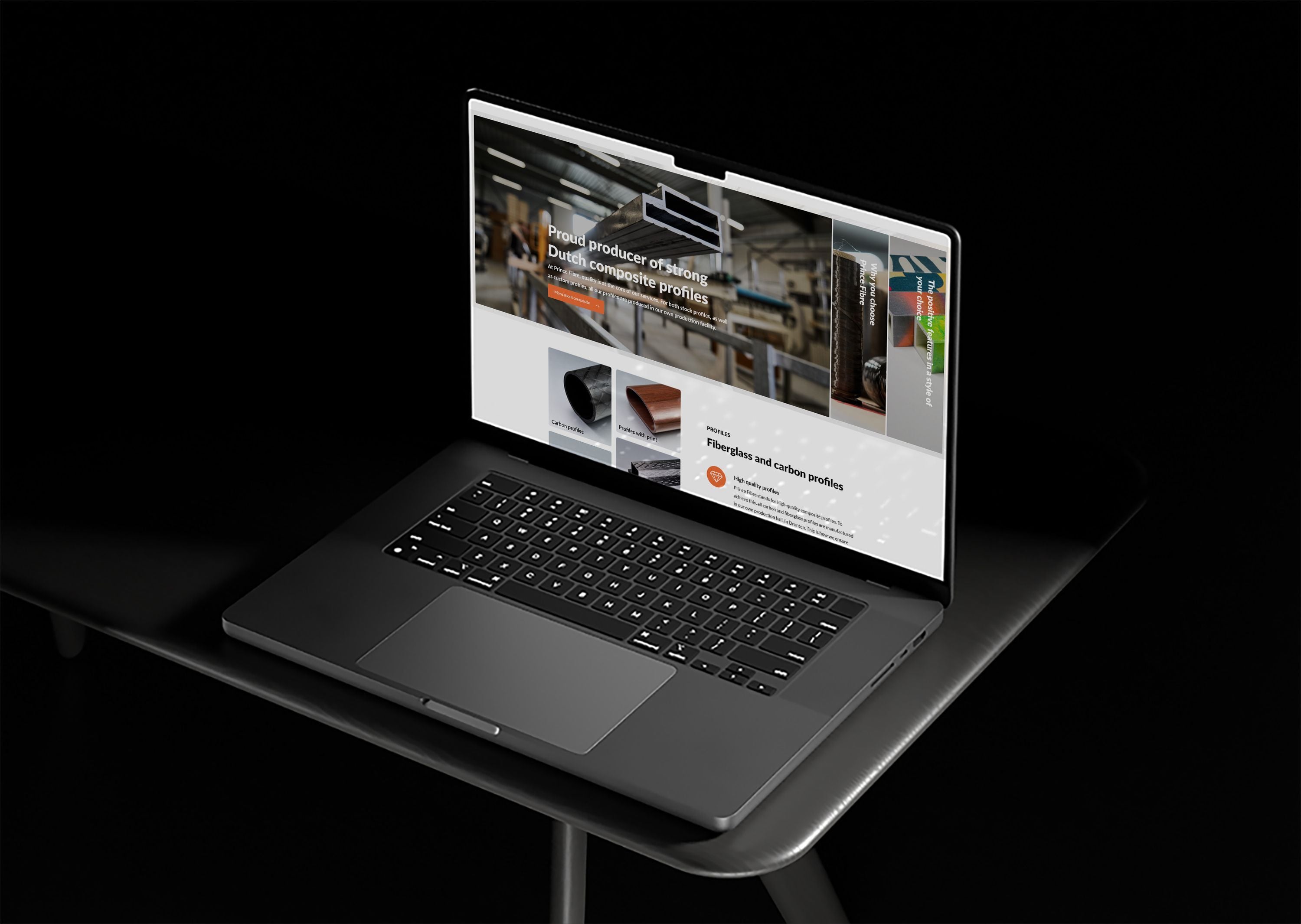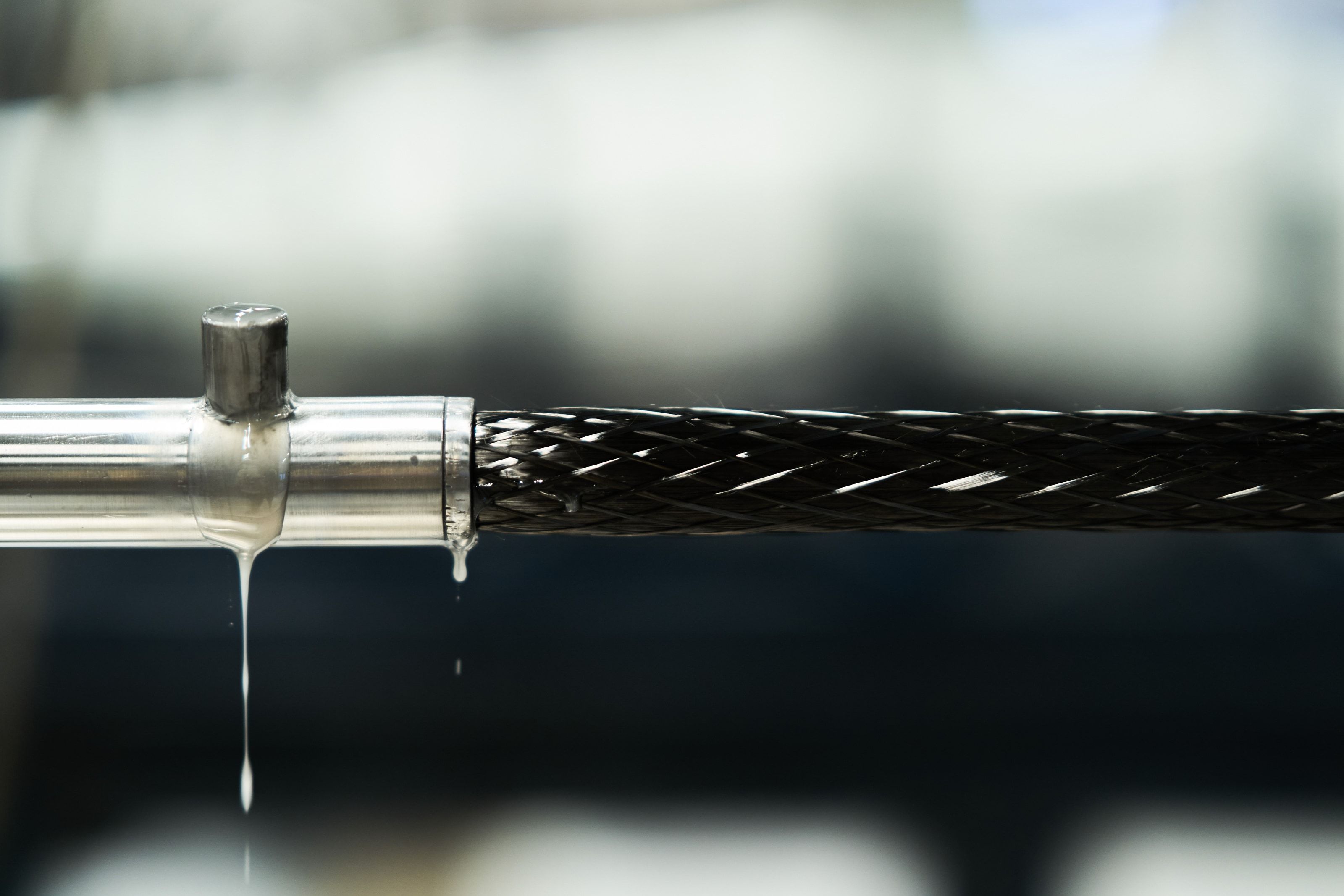
Prince Fibre makes composite profiles - carbon and glass-fibre reinforced, pultruded to length - for industries from automotive to marine to sport, from a production facility in Dronten. Their website and wider marketing were being rebuilt, and the material to fill it had to be made first.
My part was the photography and video: on the factory floor in Dronten, close on the pultrusion process itself - carbon tow and glass fibre being drawn and set - and interview footage that has run on their site ever since.
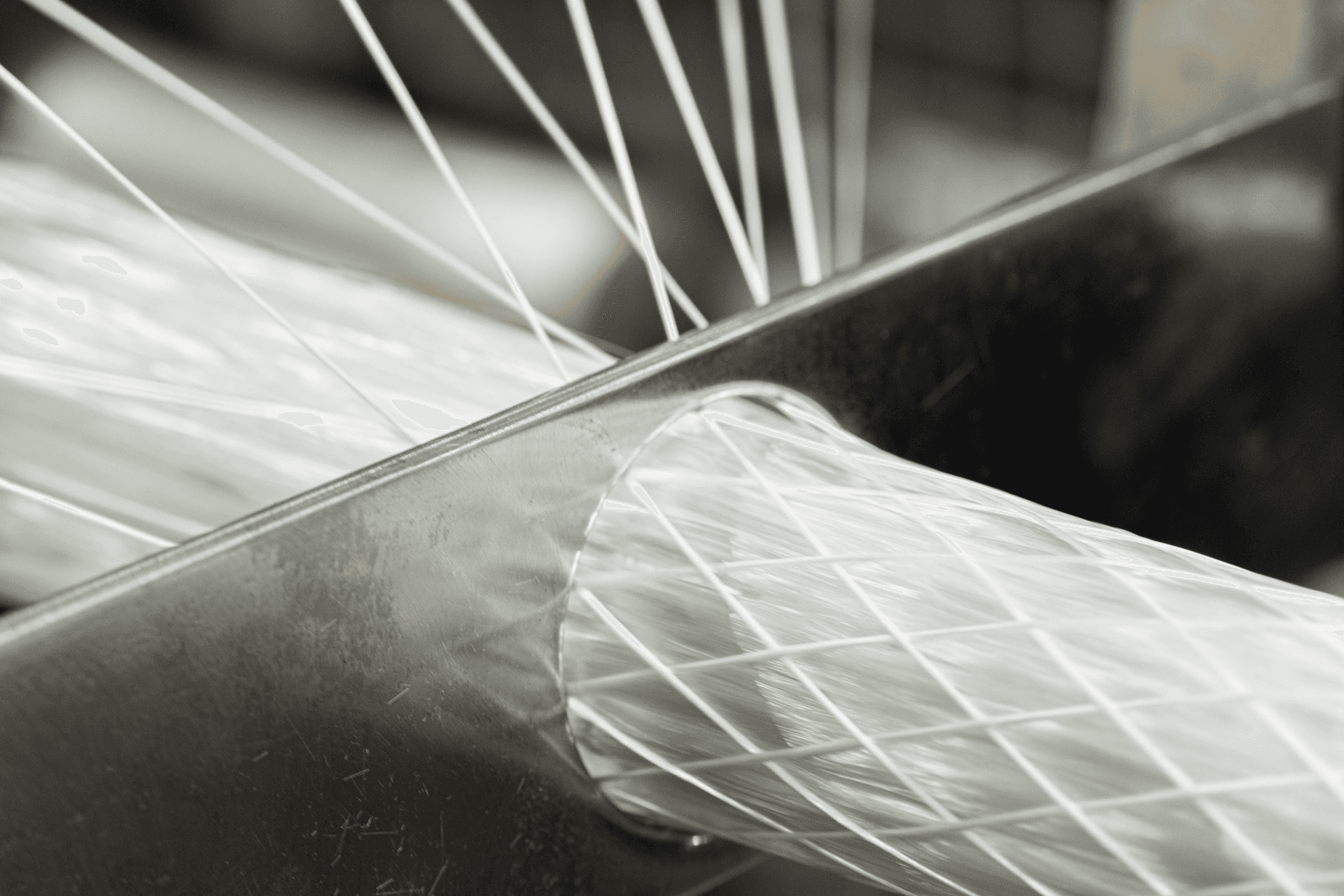
A pultruded composite profile is made in a continuous, largely automated process - fibre pulled through resin, shaped and cured in one pass. Photographed badly, that reads as an anonymous factory line rather than what it actually is: a precise, engineered material.
The material itself is also genuinely hard to photograph well - carbon tow is close to black, wet resin barely catches light, and the process moves. Getting a still, legible frame out of it meant working close and controlling the light carefully.
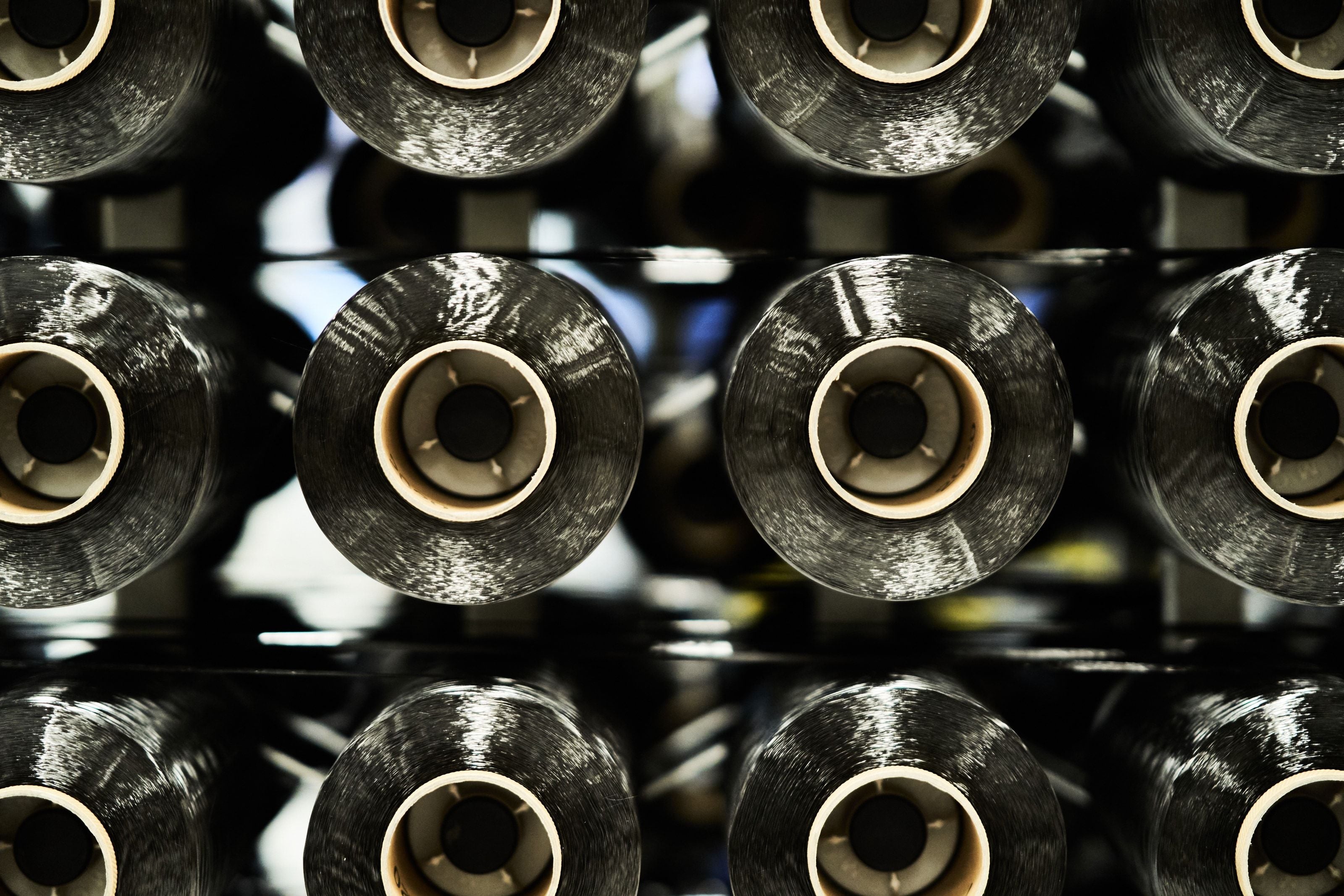
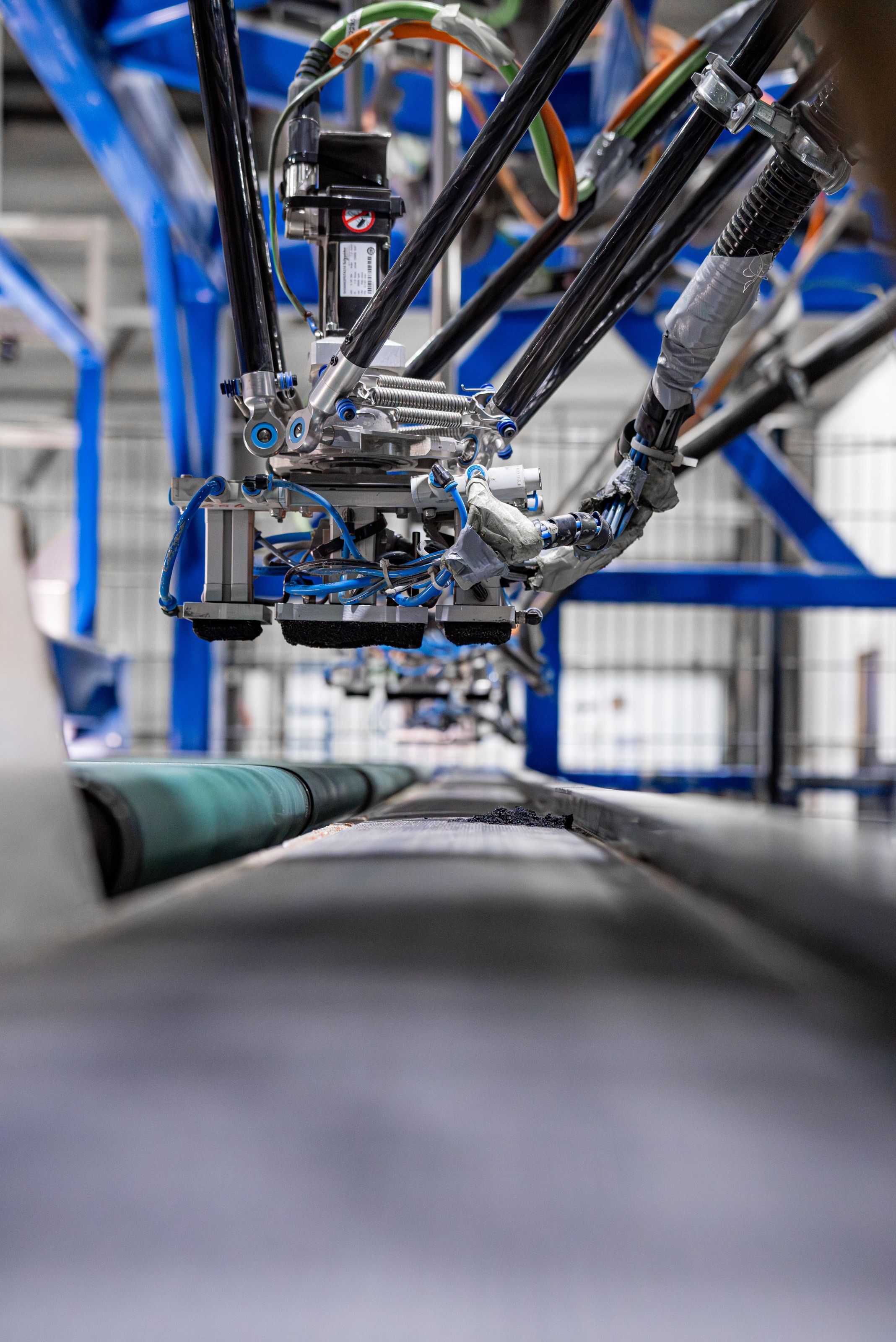
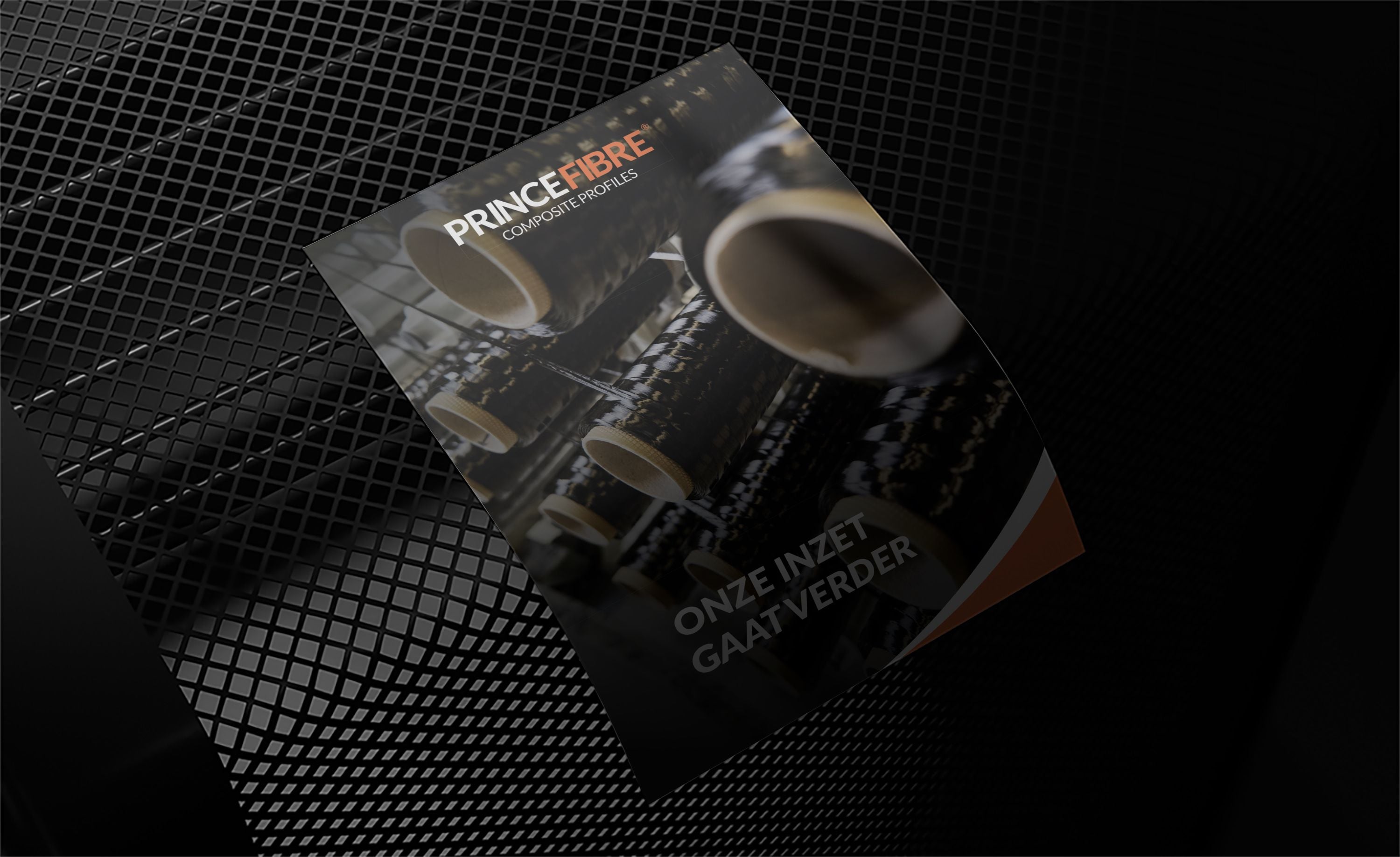
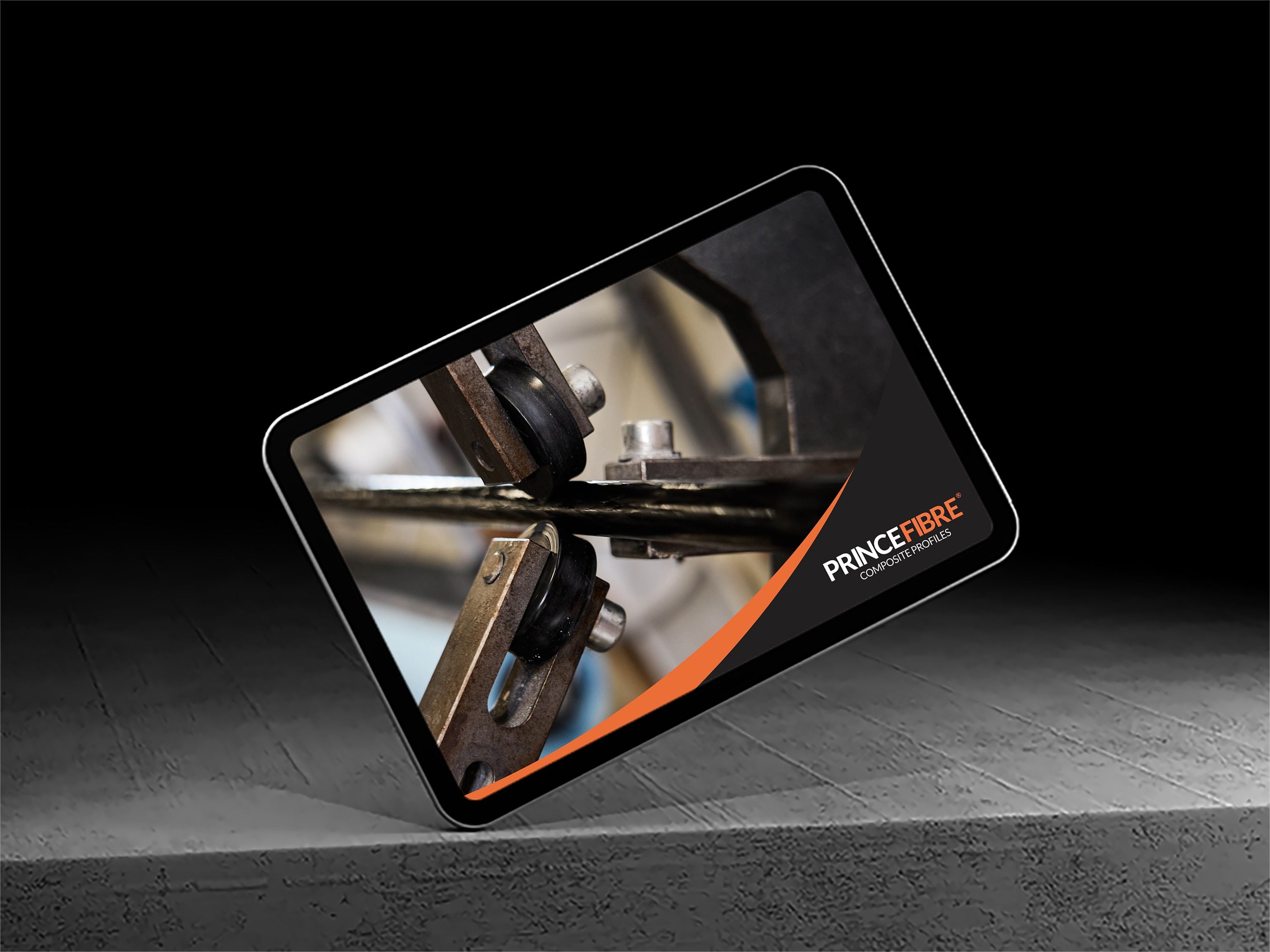
I shot on the production floor in Dronten - close macro work on the pultrusion line itself, carbon-fibre spools racked ready for use, and the robotics that move a finished profile off the line. Alongside it, interview video with the team, cut for use on Prince Fibre's own site.
That photography has run across Prince Fibre's marketing since - on their website, in trade-fair material, and in social content - the same images doing duty well beyond the shoot itself.
We went from a modest player to an established name. Thanks to Giraffes4Zebras' strategic marketing approach, we now reach exactly the right customers.
Wim Groothuis, Prince Fibre
The photography and video have stayed in active use since - on the Prince Fibre website, in trade-fair material, and in social content - carrying the same images across the material Giraffes4Zebras built around them.